
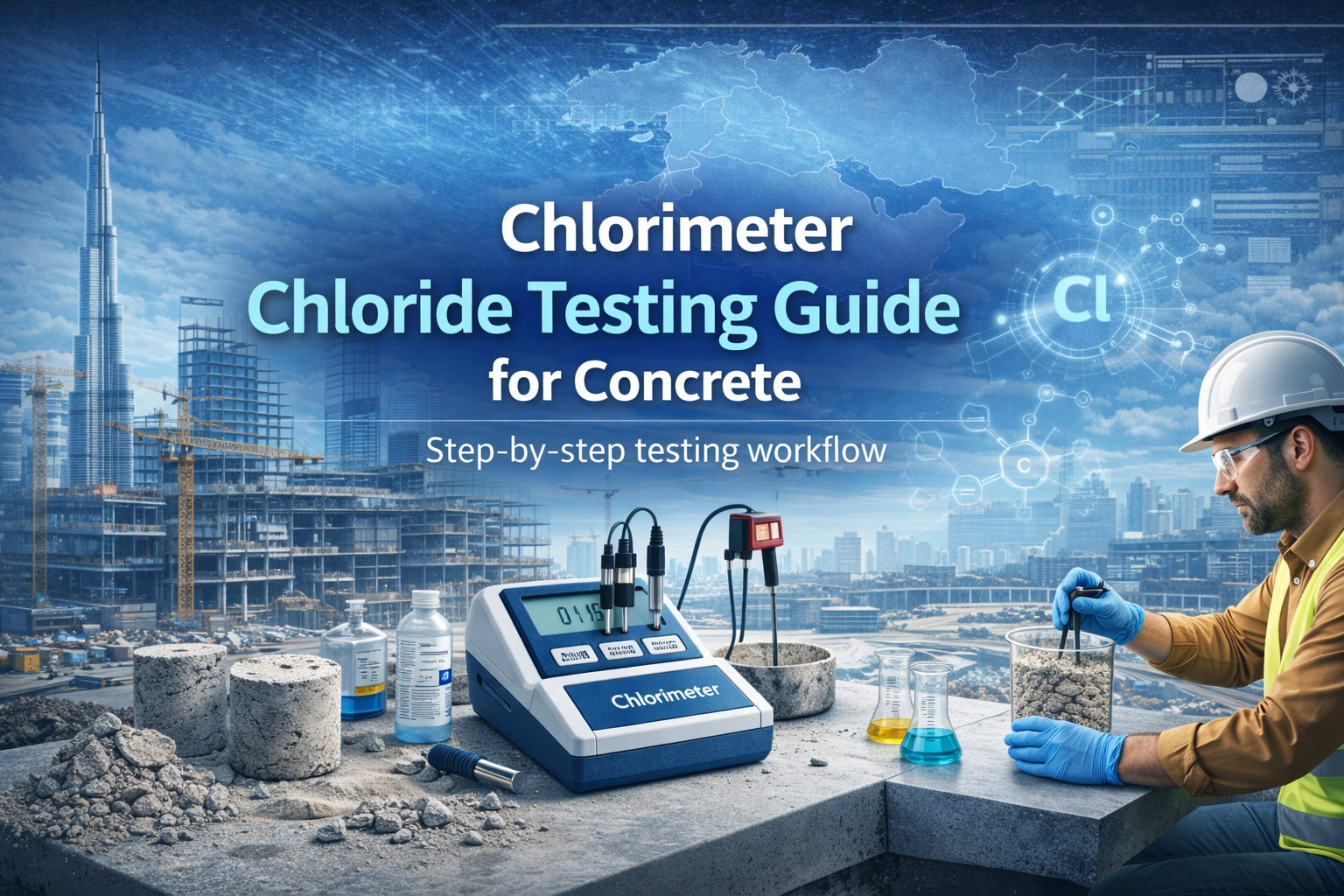
Why Chloride Testing Matters for Reinforced Concrete
When chloride ions penetrate concrete, they trigger rapid corrosion of steel reinforcement and compromise structural durability. Routine chloride monitoring is mandated in coastal concrete, parking decks, and bridges to prove compliance with ASTM D512 or BS EN 12390 standards.
Using a chlorimeter chloride test lets engineers gather decisive data without destructive demolition, turning non destructive concrete testing equipment into a proactive defense.
Chlorimeter Chloride Test Workflow
A chlorimeter measures chlorides photometrically after a small sample is dissolved in reagent. The test rig includes a calibrated lamp, cuvette, and reference standard. TriomidTech supplies complete kits plus a link to your non-destructive testing inventory-like the COR Map II-so results stay traceable.
Consistent reagent quality, instrument zeroing, and clean cuvettes keep the chlorimeter chloride test repeatable across different projects.
Step-by-Step Chlorimeter Chloride Testing
- Sample prep: Grind a small core or powder from concrete, dissolve in distilled water, and mix with the supplied chloride reagent.
- Calibrate: Run the included standard before each batch to verify the chlorimeter zero and span.
- Measure: Insert the cuvette, wait for the device to stabilize, and capture the mg/L chloride readout.
- Record metadata: Note sample depth, concrete cover, and curing age to contextualize the reading.
- Repeat: Take at least two measurements per location and average to minimize noise.
Interpreting Chloride Thresholds & Reporting
Keeping chloride levels below 0.2% chloride ion by mass of cement or within 0.5% by weight of concrete mix protects 210-day service life in Gulf climates. Generate a concise report that lists locations, chloride ppm, and pass/fail status, then attach calibration certificates from TriomidTech so consultants trust the data.
Comparing chloride levels across pours highlights remediation areas and reinforces the value of
Maintenance and Troubleshooting
Schedule monthly calibration using NIST-traceable standards and keep the optical path clean to avoid stray light. A zero reading that drifts or noisy data often indicates dirty cuvettes or low reagent potency-replace the reagents and wipe the lamp window as part of the daily checklist.
If the chlorimeter chloride test keeps showing high variance, inspect the sample prep: inconsistent mixing or residual aggregate can skew results more than the instrument itself.